Everyday Choices That Make a Difference
Sustainable living involves making everyday decisions that reduce unnecessary resource consumption and environmental harm. Although individual habits may seem small, their combined effects can become significant when adopted across entire neighborhoods.
A sustainable lifestyle does not require eliminating modern conveniences. Instead, it focuses on using energy, water, materials, and transportation more efficiently while considering the environmental consequences of different choices.
Reducing Energy and Water Consumption at Home
Residential energy use contributes to greenhouse gas emissions, particularly where electricity and heating depend on fossil fuels. Households can reduce their energy demand by improving insulation, sealing air leaks, using efficient appliances, and choosing LED lighting. Smart thermostats and programmable heating systems can also help prevent unnecessary energy consumption.
Water conservation is another important part of sustainable living. Installing efficient fixtures, repairing leaks, and choosing water-conscious landscaping can reduce household demand. Rain barrels may provide water for outdoor plants where local rules permit their use.
Homeowners considering larger improvements should evaluate installation costs, expected savings, building conditions, and available incentives. Renters can also contribute through everyday conservation habits and by discussing practical improvements with property managers.
Choosing More Sustainable Transportation
Transportation affects local air quality, energy consumption, and greenhouse gas emissions. Walking, cycling, public transit, and shared transportation can reduce dependence on private vehicles, especially where neighborhoods offer safe and convenient alternatives.
For shorter journeys, walking or cycling may provide additional health benefits through regular physical activity. Public transportation can move larger numbers of people while reducing the need for individual vehicles, although its environmental performance depends on passenger numbers, vehicle technology, and energy sources.
Electric vehicles offer another option for reducing tailpipe emissions. However, their overall environmental impact also depends on electricity generation, battery production, and vehicle lifespan. Communities can support cleaner transportation through connected sidewalks, protected bicycle routes, reliable transit services, and accessible charging infrastructure.
Making Responsible Consumption Decisions
Sustainable consumption involves considering how products are manufactured, transported, used, repaired, and discarded. Purchasing durable goods and maintaining them properly can help reduce the demand for replacement materials.
Repairing household equipment, purchasing secondhand furniture, and borrowing infrequently used tools are practical ways to extend product life. Neighborhood sharing programs and local repair events can make these alternatives more accessible.
Food choices also influence environmental impacts. Planning meals, storing ingredients correctly, and using leftovers can reduce avoidable food waste. Choosing seasonal or locally produced foods may offer benefits in certain circumstances, although production methods and transportation conditions also matter.
The broader objective is to avoid unnecessary consumption while maintaining a comfortable and practical standard of living.
Creating Healthier Neighborhoods
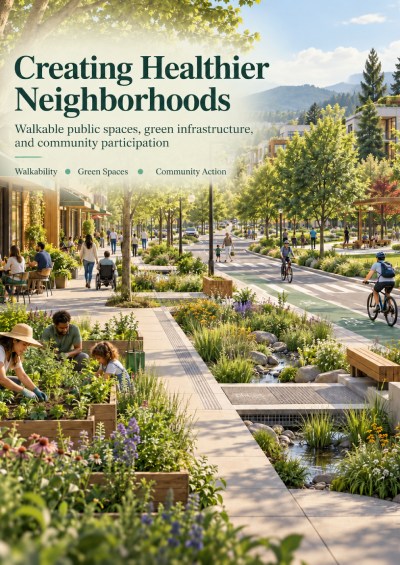
A green community incorporates environmental considerations into its infrastructure, public spaces, transportation systems, and development decisions. Rather than focusing only on individual households, this approach examines how entire neighborhoods function.
Local governments, residents, businesses, and community organizations can contribute to improvements that support environmental quality, public health, and long-term livability.
Walkable Neighborhoods and Better Public Spaces
Sustainable consumption provide practical access to homes, schools, grocery stores, workplaces, and public services. When essential destinations are located within reasonable distances, residents may have more opportunities to walk or cycle instead of driving.
Sidewalk conditions, street crossings, lighting, traffic speeds, and accessibility all influence whether a neighborhood feels safe and convenient. Public benches, shaded walking routes, and accessible pathways can also make shared spaces more welcoming.
Mixed-use development, which combines residential and commercial activities, can support these goals when accompanied by appropriate infrastructure and planning.
However, walkability should not be treated as a universal solution. Rural communities and people with different mobility needs may require additional transportation options to access important services.
Urban Trees, Parks, and Green Infrastructure
Trees and vegetation provide environmental benefits beyond their appearance. Urban trees can offer shade, help reduce surface temperatures, and support birds, insects, and other wildlife. Parks and green spaces also create opportunities for recreation and social interaction.
Green infrastructure uses natural systems to help manage environmental challenges. Rain gardens, permeable pavement, vegetated drainage areas, and restored wetlands can help manage stormwater under suitable conditions.
Communities should consider local climate, soil characteristics, maintenance requirements, and available water when selecting plants and landscaping methods. Native species are often useful because they can support local ecosystems, although their suitability varies by location.
Well-maintained green spaces can improve neighborhood conditions while helping communities respond to heat and rainfall.
Encouraging Community Participation and Cooperation
Successful environmental initiatives often depend on the participation of local residents. Community meetings, neighborhood associations, volunteer programs, and public consultations provide opportunities for people to contribute ideas and identify practical needs.
Residents may help organize tree-planting events, neighborhood cleanups, shared gardens, or environmental education programs. Local businesses and nonprofit organizations can support projects through funding, materials, or volunteer assistance.
Participation should be accessible to people with different schedules, incomes, languages, ages, and physical abilities. Projects are more likely to meet community needs when affected residents can influence important decisions.
Transparent communication about budgets, timelines, environmental benefits, and maintenance responsibilities also helps establish realistic expectations and accountability.
Understanding Cleaner Power Sources
Renewable energy comes from naturally replenished sources, including sunlight, wind, moving water, and geothermal heat. These technologies can reduce reliance on fossil fuels and contribute to lower greenhouse gas emissions.
However, renewable energy systems differ in cost, availability, land requirements, and environmental impacts. Understanding these differences helps households and communities evaluate suitable options.
Solar Energy for Homes and Communities
Solar photovoltaic panels convert sunlight into electricity that can power homes, businesses, and public facilities. Their output depends on sunlight availability, system design, panel orientation, shading, and weather conditions.
Rooftop solar systems may help property owners generate electricity on-site. Larger community solar projects can allow multiple participants to receive financial benefits from a shared installation, depending on the program and local regulations.
Before installing solar panels, property owners should consider roof condition, structural suitability, installation costs, maintenance, warranties, and utility connection requirements. Local incentives and electricity pricing can also affect financial outcomes.
Solar power generates electricity without direct combustion during operation, although manufacturing, transportation, installation, and eventual disposal still have environmental impacts.
Wind, Hydropower, and Other Renewable Technologies
Wind turbines convert the movement of air into electricity. Large wind farms can produce substantial amounts of power in locations with suitable wind resources, while smaller installations may serve particular facilities or remote areas.
Hydropower generates electricity from moving water, but its environmental effects can include changes to river habitats and aquatic ecosystems. Geothermal energy uses heat from beneath Earth's surface for electricity production or heating applications, depending on local geological conditions.
Other technologies, including certain forms of biomass energy, may also contribute to renewable energy systems. Their environmental performance depends on fuel sourcing, emissions, land use, and production methods.
No single technology is appropriate everywhere. Geographic conditions, environmental assessments, infrastructure needs, and community priorities influence renewable energy planning.
Energy Storage and Reliable Electricity Systems
Solar and wind generation vary with weather conditions and time of day. Electricity systems therefore need flexibility to match supply with demand while maintaining reliable service.
Battery storage can hold electricity for later use, while pumped-storage hydropower and other technologies provide additional storage options. Grid improvements, regional electricity connections, and demand management can also help accommodate renewable generation.
Communities considering local energy projects should examine equipment costs, safety standards, maintenance needs, and the reliability of existing infrastructure. Qualified professionals and relevant authorities should oversee technical planning and electrical installations.
Renewable energy development is most effective when assessed as part of a wider electricity system rather than as an isolated technology. Efficiency improvements and reduced energy waste remain important alongside new generation capacity.
Growing Food and Community Connections
Urban gardening brings food production and green spaces into cities and residential neighborhoods. Gardens can occupy shared plots, school grounds, rooftops, balconies, or previously unused land.
Beyond producing vegetables and herbs, gardening projects can support environmental education, social connections, and practical knowledge about soil, water, and local ecosystems.
How Community Gardens Benefit Neighborhoods
Community gardens provide shared spaces where residents can grow plants, exchange knowledge, and participate in outdoor activities. Some gardens allocate individual plots, while others use a cooperative approach in which members maintain the entire growing area.
These spaces can introduce people to seasonal food production and help children understand how crops develop. Gardening activities may also create opportunities for neighbors who would otherwise have limited contact.
However, successful projects require suitable land, access to water, clear management rules, and regular maintenance. Organizers should verify land-use permissions and consider accessibility for people with different physical abilities.
Where soil contamination is a concern, testing and appropriate growing methods, such as raised beds with clean soil, can help reduce potential exposure.
Composting, Soil Health, and Efficient Water Use
Healthy soil supports plant growth by providing nutrients, retaining moisture, and creating conditions for beneficial organisms. Urban gardeners can improve soil management through composting, mulching, and appropriate crop rotation.
Composting converts suitable organic materials, including many fruit and vegetable scraps, into a soil amendment through biological decomposition. A well-managed compost system requires appropriate moisture, airflow, and a balance of materials.
Water conservation is especially important in areas experiencing drought or seasonal shortages. Mulch can reduce evaporation, while drip irrigation can deliver water close to plant roots.
Gardeners should avoid applying chemicals or untreated materials without understanding their effects on soil quality and food safety. Local agricultural extension services can provide guidance suited to regional growing conditions.
Supporting Local Food Systems and Education
Urban gardening can complement existing food systems by producing some fresh ingredients near where people live. Although small gardens generally cannot supply all household food needs, they may improve access to certain vegetables, herbs, and seasonal crops.
Schools can incorporate gardens into science, nutrition, and environmental education. Students may learn about plant biology, pollination, weather patterns, and responsible resource use through practical activities.
Community organizations can also arrange seed exchanges, gardening workshops, and produce-sharing initiatives. These programs may be particularly helpful in neighborhoods with limited access to gardening space.
Urban agriculture works best as one part of a broader food strategy that also considers affordability, transportation, food safety, and reliable distribution.
Climate and Environment: Understanding Challenges and Solutions

Environmental sustainability requires an understanding of how human activities affect the climate, natural resources, and ecosystems. Climate change, pollution, habitat loss, and resource depletion can influence both natural environments and everyday living conditions.
Communities can respond through a combination of emissions reduction, environmental protection, and preparation for changing local conditions.
Understanding Climate Change and Greenhouse Gas Emissions
Climate change refers to long-term changes in temperature and other aspects of Earth's climate system. Human activities, particularly fossil fuel combustion and land-use changes, have increased atmospheric concentrations of greenhouse gases that contribute to global warming.
Rising temperatures can influence extreme heat, rainfall patterns, sea levels, and ecosystem conditions. The specific effects differ between regions, and local vulnerabilities depend on geography, infrastructure, and population characteristics.
Communities can contribute to emissions reduction through building efficiency, cleaner electricity, transportation planning, and improved resource management.
These efforts are often described as climate mitigation. Adaptation, by contrast, involves preparing for climate impacts that are already occurring or may develop in the future. Both approaches are important to long-term environmental planning.
Protecting Air Quality, Water, and Biodiversity
Environmental health depends on functioning ecosystems and access to clean natural resources. Air pollution can affect respiratory and cardiovascular health, while contaminated water may create risks for people, agriculture, and wildlife.
Local environmental protection measures can include monitoring pollution, improving wastewater management, preserving natural habitats, and reducing harmful runoff from developed areas.
Biodiversity refers to the variety of living organisms, including plants, animals, fungi, and microorganisms. Diverse ecosystems provide important functions such as pollination, nutrient cycling, and water regulation.
Communities can support biodiversity by protecting existing habitats, maintaining connected green spaces, and reducing the spread of invasive species. Environmental projects should consider ecological conditions rather than assuming that all landscaping or planting activities provide equal benefits.
Using Environmental Information to Guide Decisions
Effective sustainability planning depends on reliable information. Local weather records, air quality measurements, flood maps, energy assessments, and water-use data can help communities identify environmental concerns.
Public agencies, universities, and scientific institutions publish resources that residents and planners can use to understand changing conditions. Comparing information from credible sources is particularly important when evaluating complex claims about climate impacts or environmental technologies.
Data should also be interpreted in context. A single unusually hot summer, for example, does not establish a long-term climate trend without supporting observations over an extended period.
Community surveys can complement scientific data by showing how environmental conditions affect daily life. Combining technical evidence with local experience can support more informed and transparent decisions.
Preparing for Environmental and Economic Change
Community resilience describes the ability of a neighborhood, town, or region to prepare for disruptions, respond effectively, and recover while maintaining essential functions. Environmental emergencies, infrastructure failures, and economic pressures can all test this capacity.
Building resilience requires cooperation between residents, local authorities, service providers, and community organizations before serious problems occur.
Preparing for Extreme Weather and Environmental Hazards
Different locations face different environmental risks. Coastal communities may experience flooding and storms, while inland areas can be affected by extreme heat, drought, wildfire, or severe rainfall.
Preparedness begins with understanding local hazards and identifying vulnerable infrastructure. Emergency communication systems, evacuation plans, drainage maintenance, and accessible public shelters can improve readiness.
Residents can contribute by reviewing local emergency guidance, preparing basic supplies, and identifying reliable sources of information. Households should also consider the needs of children, older adults, people with disabilities, and pets.
Emergency planning is most useful when procedures are realistic, regularly reviewed, and coordinated with local response agencies. Community-level preparation complements, rather than replaces, official emergency services.
Strengthening Social Networks and Local Support
Resilience is not determined by infrastructure alone. Strong relationships between neighbors can help communities communicate, share resources, and support vulnerable residents during disruptions.
Local associations, volunteer groups, schools, libraries, and community centers often provide spaces where these relationships develop. Programs that connect residents with emergency information, food assistance, and other services can strengthen local support systems.
Communication should remain accessible when electricity, internet service, or transportation is interrupted. Communities may need a combination of digital alerts, telephone networks, and in-person coordination.
Long-term resilience also involves understanding economic pressures, including housing affordability and access to essential services. A community may have strong physical infrastructure but still struggle to recover if many residents lack adequate financial resources.
Planning Infrastructure for Long-Term Resilience
Infrastructure decisions influence how well communities respond to future challenges. Roads, electricity networks, water systems, public buildings, and communications services may remain in use for decades, making long-term planning essential.
Climate-related risk assessments can help identify whether existing infrastructure is suitable for expected conditions. Improvements may include better drainage, stronger building standards, backup power for critical facilities, and more heat-resistant public spaces.
Local authorities should also consider maintenance costs, emergency access, accessibility, and financial sustainability when evaluating new projects.
Resilience planning benefits from regular reviews because environmental conditions, technology, population needs, and available funding can change. Transparent priorities and measurable objectives help communities evaluate whether investments are delivering their intended benefits.
Recycling, Composting, and Responsible Resource Management
Waste management is an important part of environmentally responsible living. Producing, transporting, packaging, and disposing of goods requires resources and energy, while poorly managed waste can contribute to pollution and environmental damage. Reducing waste at its source is generally more effective than relying entirely on disposal or recycling. Communities can support this approach by improving collection systems, providing accurate information about accepted materials, and making reuse options more accessible.
Practical waste reduction strategies include:
- Reducing unnecessary purchases: Choosing products with a clear purpose and avoiding excessive packaging.
- Reusing household items: Repairing, donating, exchanging, or repurposing goods before discarding them.
- Recycling correctly: Following local collection rules for paper, metal, glass, plastics, and other accepted materials.
- Composting organic waste: Diverting suitable food scraps and yard materials from disposal where programs are available.
- Managing hazardous materials: Using approved collection services for batteries, electronics, chemicals, and other materials requiring special handling.
- Preventing food waste: Planning purchases, checking storage conditions, and using ingredients before they spoil.
Recycling programs vary by municipality, and not every item marked as recyclable can be processed through every local system. Residents should consult their collection provider rather than assuming that packaging symbols guarantee acceptance. Communities can also develop repair workshops, reusable-container initiatives, and material exchange programs that keep useful products in circulation.
A longer-term approach to waste management is sometimes called a circular economy. It emphasizes designing products and systems that retain material value through maintenance, reuse, repair, refurbishment, and recycling. While no system can eliminate waste entirely, better product design and resource management can reduce unnecessary disposal and support more responsible consumption.
Building a Greener Future, One Community at a Time
Sustainable communities develop through a combination of individual responsibility, effective infrastructure, environmental knowledge, and long-term cooperation. Energy efficiency, renewable power, urban gardening, greener public spaces, waste reduction, and climate preparedness each address different aspects of community well-being. Their benefits depend on local circumstances, available resources, and thoughtful implementation.
No neighborhood becomes sustainable through a single project or lifestyle change. Progress involves identifying priorities, involving residents, evaluating environmental results, and improving plans as conditions evolve. By connecting practical everyday habits with broader community planning, towns and neighborhoods can work toward healthier environments, more reliable services, and a better quality of life for current and future generations.